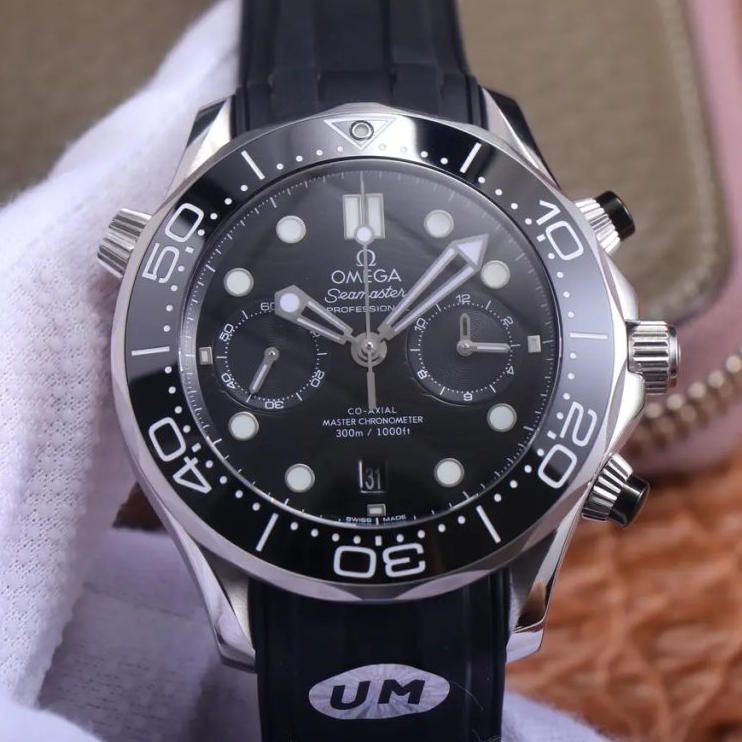
A chronograph changes the design problem of the Seamaster Diver 300M. Extra hands, registers and external controls are added to a watch already defined by a prominent bezel and robust case. In a successful design, the chronograph functions fit into the diver’s architecture. On an uneven reproduction, they can look like separate features attached to the same watch.
This Omega Seamaster 300M chronograph replica is associated in the original listing with UM Factory and a movement described as clone 9900. Those are product claims, not independently verified specifications. The photographs allow us to discuss what can be seen, while any assessment of actual chronograph operation would require testing.
Start with the dial. A good photograph should let you distinguish the main time indication from elapsed-time information without studying every label. The size and placement of the subdials matter, as do the relative lengths of the central hands and the contrast against the background. If the registers sit too close to the edge, the visual centre of the watch changes.
How the controls affect the profile
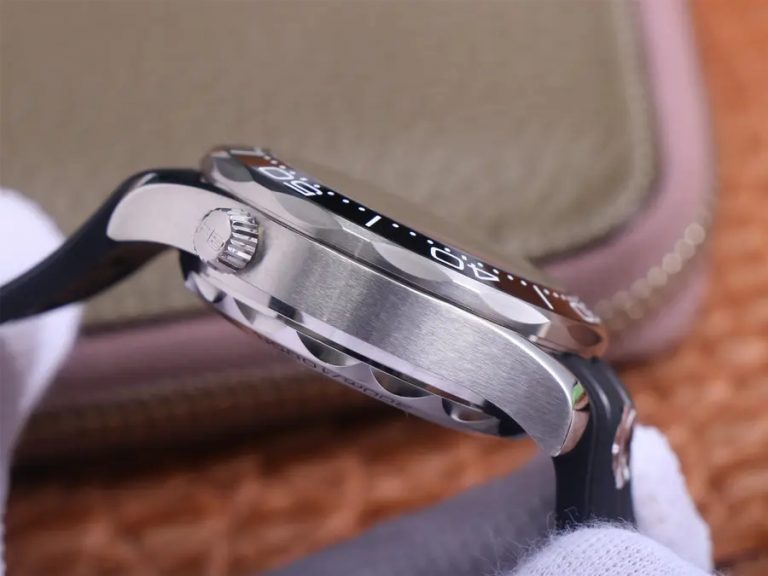
The crown and chronograph pushers are practical devices, but they also determine the watch’s silhouette. Their alignment with the case band, the spacing between controls and the shape of the crown guards are all visible clues. For Seamaster chronograph replica case design, a side image can be more informative than a polished front photograph.
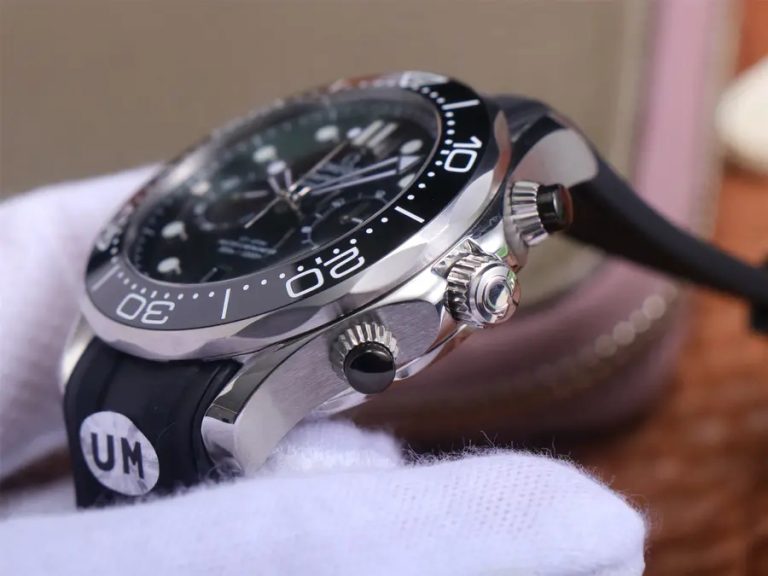
Look at where brushed and polished finishes meet. A thick case does not need to appear clumsy, yet sharp changes in finish can make protruding controls look overbuilt. The transition to the strap is also significant: a rubber strap can visually contain a bulky case, whereas a poorly matched strap makes the watch seem wider.
The original model’s calibre 9900 is a specific Omega chronograph movement. A decorated reproduction may imitate visible elements without reproducing its mechanical architecture. In particular, a display back cannot tell us whether the elapsed-time mechanism, reset action or winding system behaves as the original does. No performance or water-resistance claim follows from an engraving.
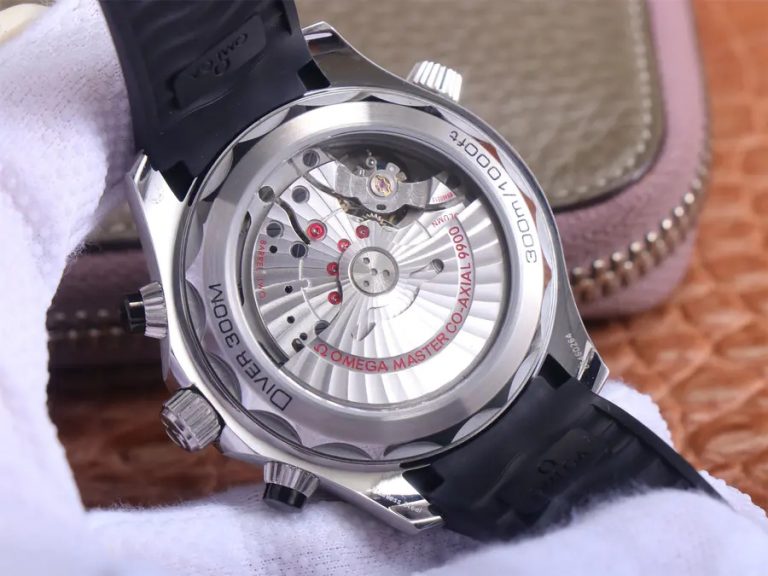
The chronograph pusher feel and reset behaviour would be central to a hands-on review. Since the material available here consists of listing images and descriptions, this article makes no claim to have performed that test. Instead it identifies the aspects that require verification before any comparison can be called technical.
Our Omega watch editorial archive separates visual analysis from performance claims for exactly this reason. It is easy to be impressed by a visually detailed movement photograph while overlooking the simplest functional questions.
For a less complicated reference point, compare the Seamaster 300M replica with a conventional dive-watch layout. That model exposes the underlying case and bezel relationship more clearly because the dial is asked to do less.
Ultimately the most useful judgement concerns readability, control placement and case coherence. A convincing chronograph needs these elements to work together before its factory designation can add any meaningful context.
About the Author
